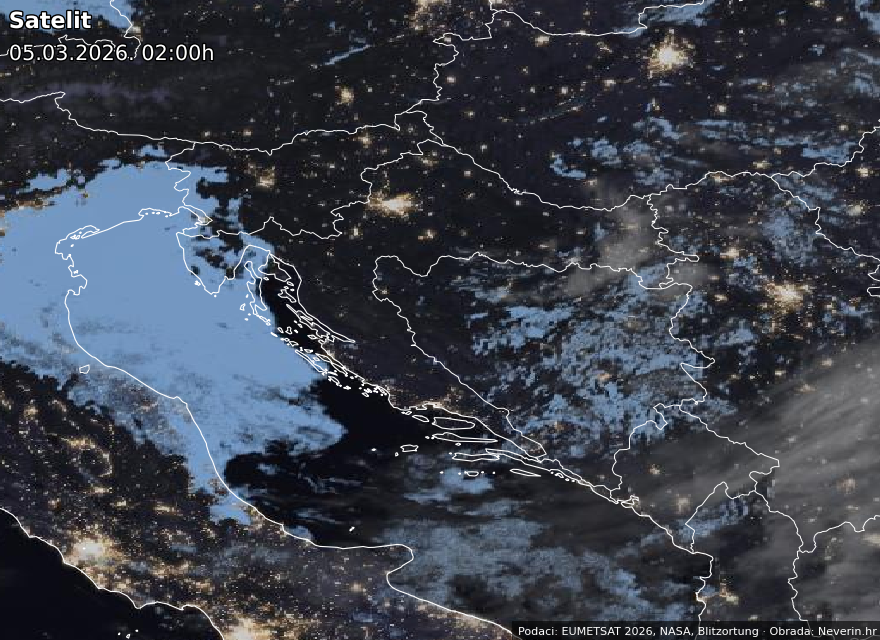
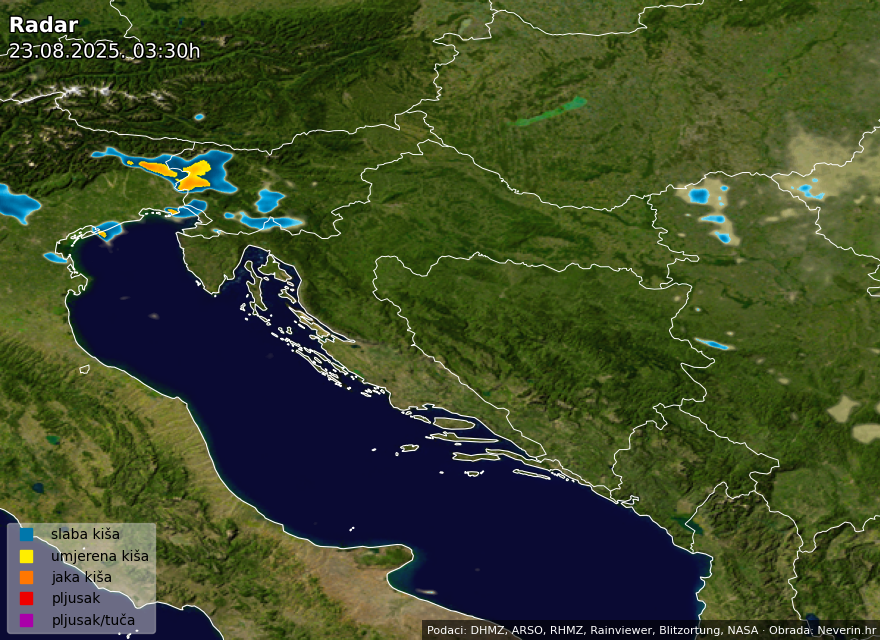
UV index forecast
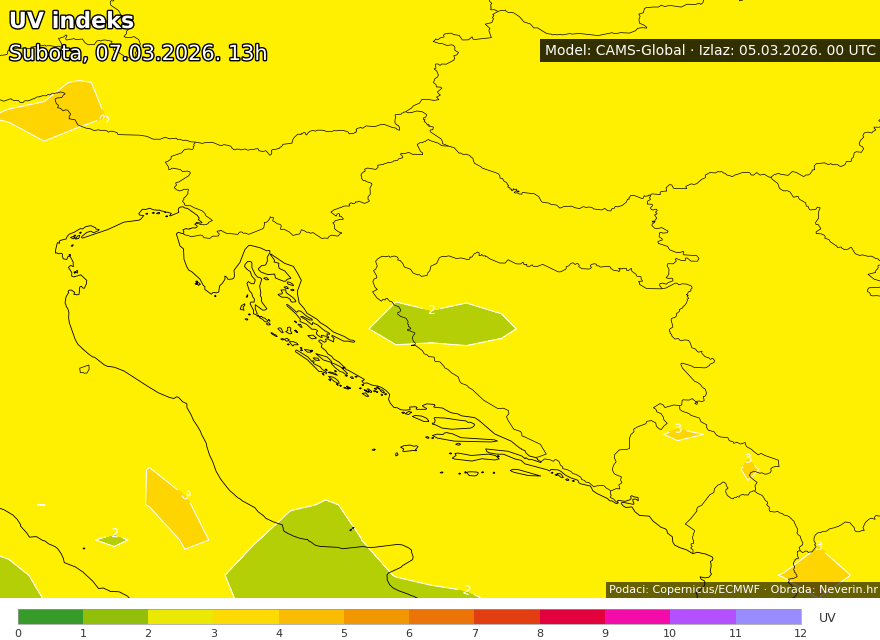
3-day UV index forecast for Croatia and Europe. The UV index is a measure of the level of UV radiation.
UV index Croatia
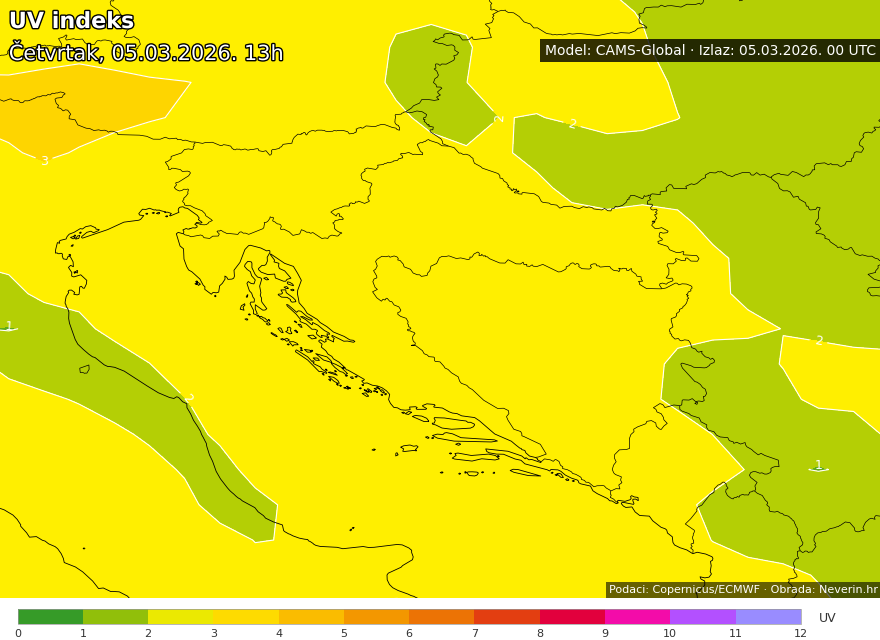
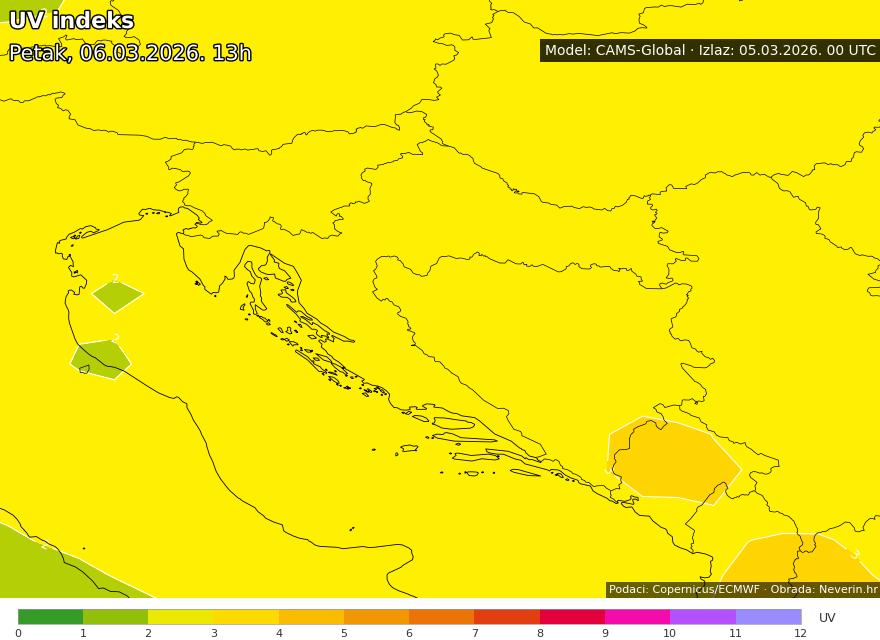
UV index Europe
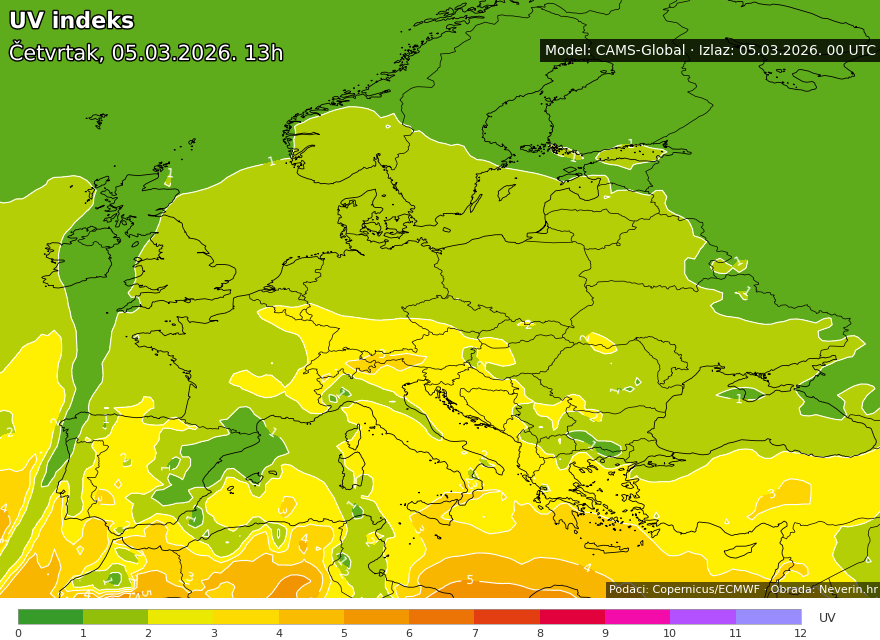
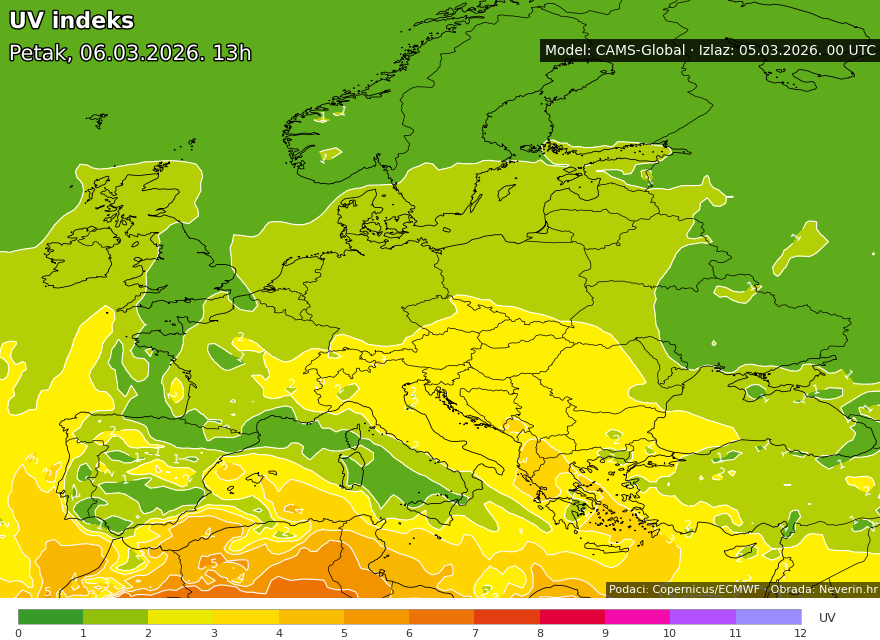
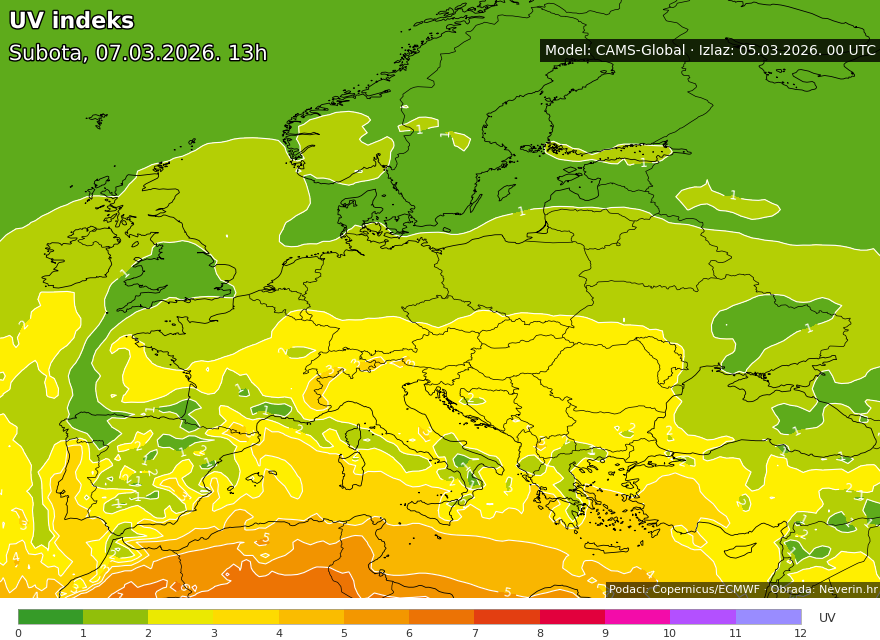
The UV index is a measure of the level of UV radiation. The values of the index range from zero upward - the higher the UV index, the greater the potential for damage to the skin and eye, and the less time it takes for harm to occur. The UV index is an important vehicle to alert people about the need to use sun protection.
The UV index forecast is based on data from the Copernicus Atmosphere Monitoring Service (CAMS Global), which provides global forecasts of atmospheric composition, including concentrations of ozone and aerosols, based on numerical models operationally run by the European Centre for Medium-Range Weather Forecasts (ECMWF).
UV index levels
| 1-2 low | A UV index reading of 0 to 2 means low danger from the Sun's UV rays for the average person. Wear sunglasses on bright days. If you burn easily, cover up and use broad spectrum SPF 15+ sunscreen. Bright surfaces, sand, water, and snow will increase UV exposure. |
|---|---|
| 3-5 moderate | A UV index reading of 3 to 5 means moderate risk of harm from unprotected sun exposure. Stay in shade near midday when the Sun is strongest. If outdoors, wear sun-protective clothing, a wide-brimmed hat, and UV-blocking sunglasses. Generously apply broad spectrum SPF 15+ sunscreen every 1.5 hours, even on cloudy days, and after swimming or sweating. Bright surfaces, such as sand, water, and snow, will increase UV exposure. |
| 6-7 high | A UV index reading of 6 to 7 means high risk of harm from unprotected sun exposure. Protection against skin and eye damage is needed. Reduce time in the sun between 10 a.m. and 4 p.m. If outdoors, seek shade and wear sun-protective clothing, a wide-brimmed hat, and UV-blocking sunglasses. Generously apply broad spectrum SPF 15+ sunscreen every 1.5 hours, even on cloudy days, and after swimming or sweating. Bright surfaces, such as sand, water, and snow, will increase UV exposure. |
| 8-10 very high | A UV index reading of 8 to 10 means very high risk of harm from unprotected sun exposure. Take extra precautions because unprotected skin and eyes will be damaged and can burn quickly. Minimize sun exposure between 10 a.m. and 4 p.m. If outdoors, seek shade and wear sun-protective clothing, a wide-brimmed hat, and UV-blocking sunglasses. Generously apply broad spectrum SPF 15+ sunscreen every 1.5 hours, even on cloudy days, and after swimming or sweating. Bright surfaces, such as sand, water, and snow, will increase UV exposure. |
| 11+ extreme | A UV index reading of 11 or more means extreme risk of harm from unprotected sun exposure. Take all precautions because unprotected skin and eyes can burn in minutes. Try to avoid sun exposure between 10 a.m. and 4 p.m. If outdoors, seek shade and wear sun-protective clothing, a wide-brimmed hat, and UV-blocking sunglasses. Generously apply broad spectrum SPF 15+ sunscreen every 1.5 hours, even on cloudy days, and after swimming or sweating. Bright surfaces, such as sand, water, and snow, will increase UV exposure. |