UV index forecast
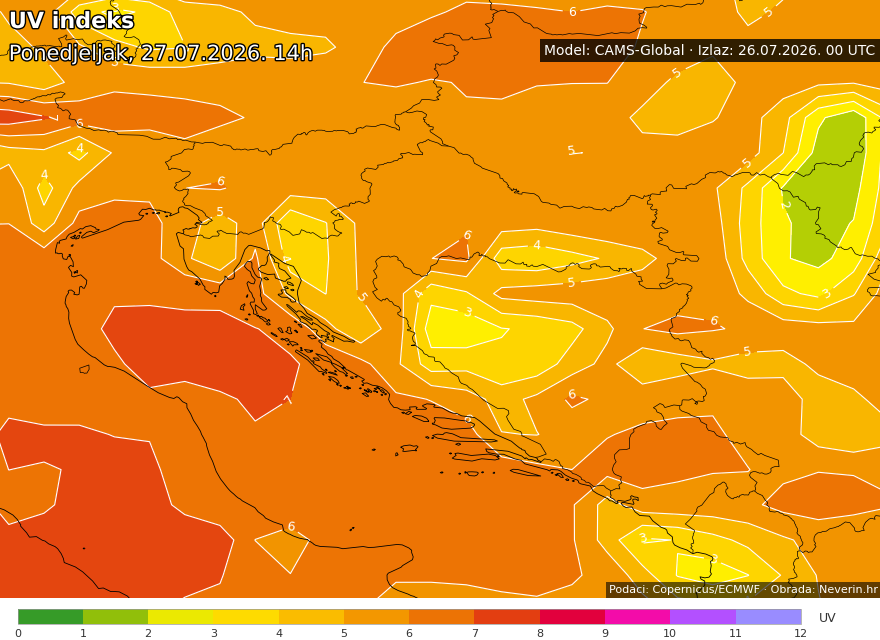
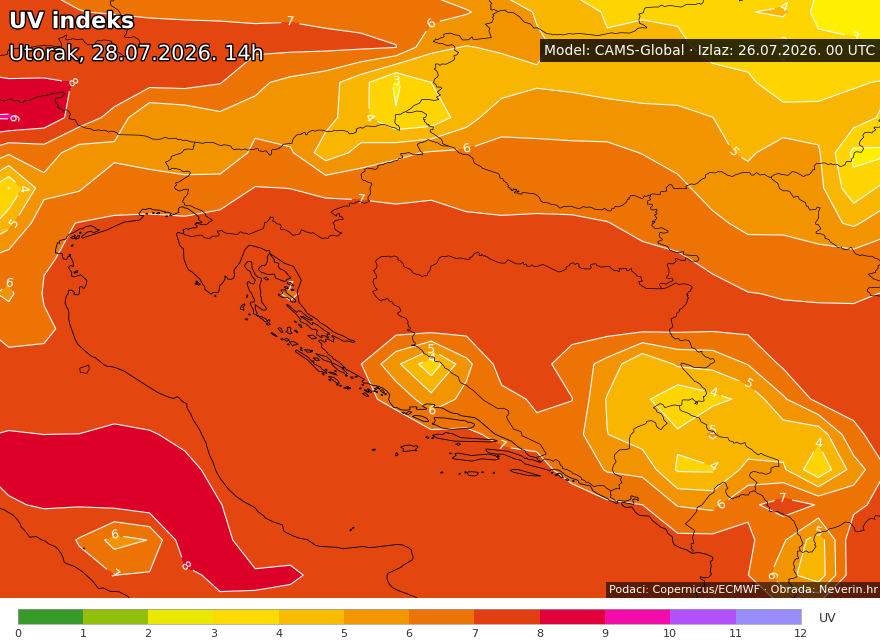
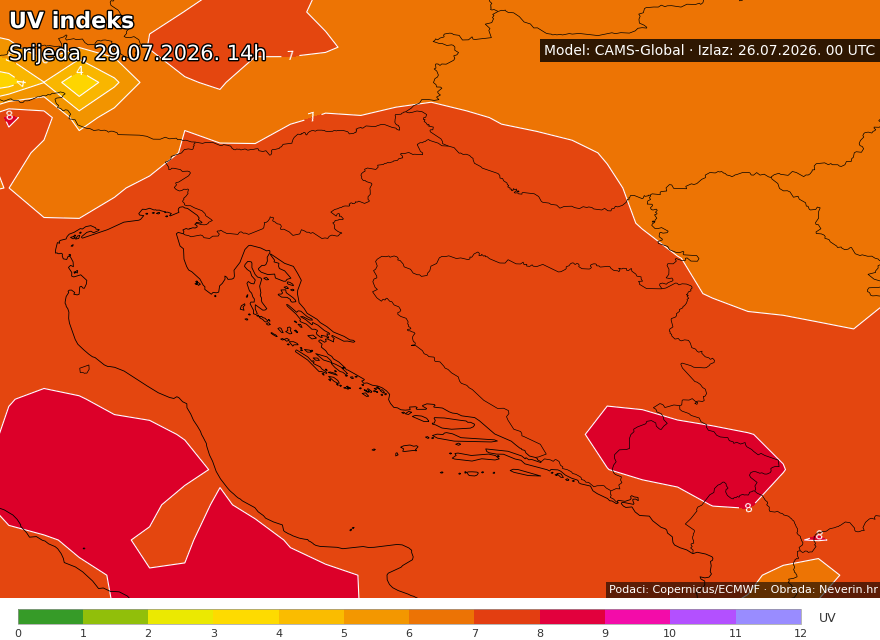
Track the level of UV radiation over Croatia for the next three days.
UV index Croatia
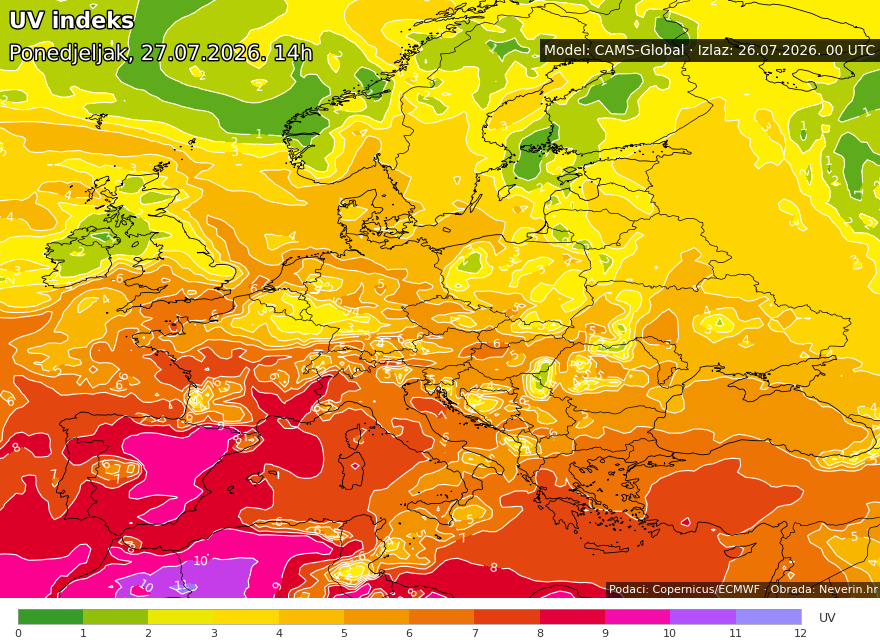
UV index Europe
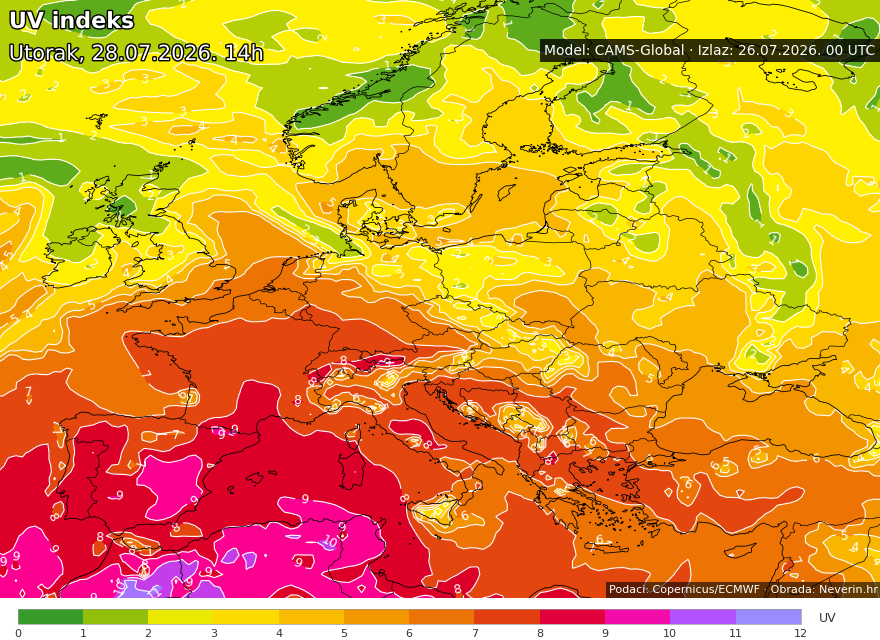
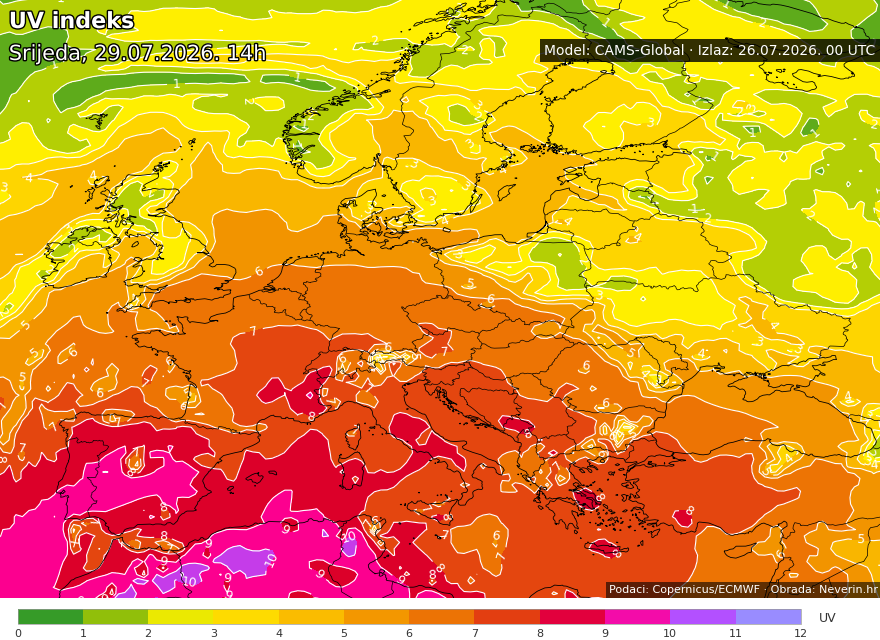
UV index levels
1-2low
Low risk
Low danger for the average person. Protection is usually not needed; sunglasses are handy under clear skies.
3-5moderate
Moderate risk
Seek shade around midday and wear sunglasses, a hat and sunscreen.
6-7high
High risk
High risk for skin and eyes. Reduce time in the sun between 10 a.m. and 4 p.m. and be sure to protect yourself.
8-10very high
Very high risk
Skin and eyes can be damaged quickly. Avoid the sun around midday and take all protective measures.
11+extreme
Extreme risk
Unprotected skin can burn in minutes. Avoid sun exposure whenever possible.
Frequently asked questions
What is the UV index?
The UV index is a number that shows the level of the Sun's ultraviolet (UV) radiation. The higher the value, the greater the chance of damage to skin and eyes in a shorter time. The scale starts at 0 and has no upper limit, but in Croatia it most often ranges between 7 and 9 in summer.
When is UV radiation strongest?
UV radiation is strongest in the middle of the day, roughly between 10 a.m. and 4 p.m., when the Sun is highest in the sky. That is also when the risk level is highest, regardless of the air temperature.
Does the UV index apply when it's cloudy?
Yes. Clouds let through part of the UV radiation, so sunburn can occur even on cloudy days, especially with high, thin clouds.
Do I need protection in winter too?
In winter the UV index is lower, but on snow and at higher altitudes exposure can be significantly greater, because snow additionally reflects radiation.
Where does the data come from?
The forecast is based on data from the Copernicus Atmosphere Monitoring Service (CAMS Global), which provides forecasts of atmospheric composition based on ECMWF models. The UV index forecast is updated once a day.
The data shown is for informational purposes. The UV index forecast is based on the CAMS Global model (ECMWF).